








One Product, Different Customers: What Almarai’s Milk Range Teaches About Segmentation


In short
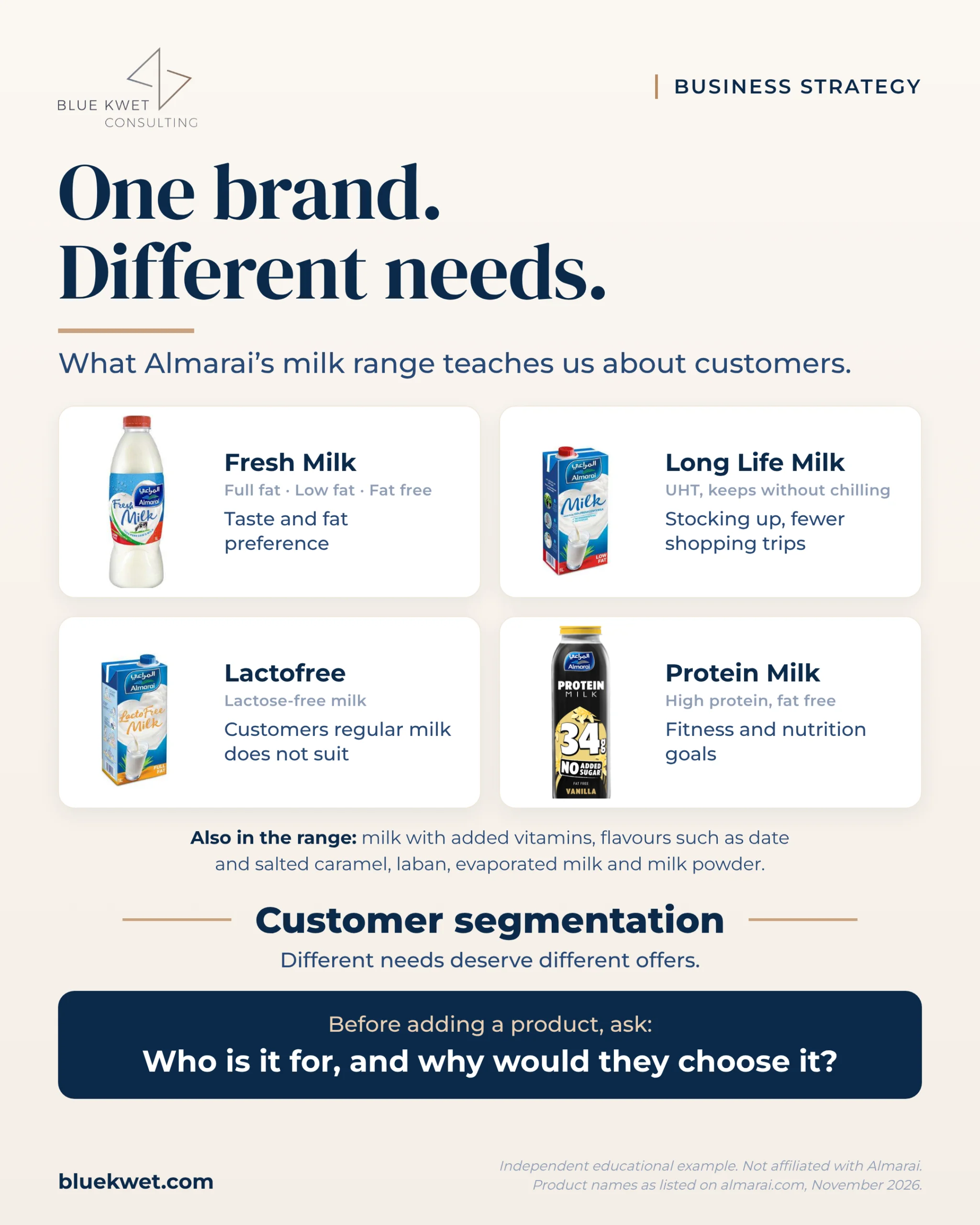
- Almarai sells milk in many versions because different customers buy milk for different reasons.
- Each main version answers one clear need: taste and fat level, storage, lactose intolerance, or fitness.
- That is customer segmentation in practice: start with the customer’s need, then shape the product around it.
- A new variant should earn its place through real demand, healthy contribution and complexity your operation can handle.
- Before adding a product, ask: who is it for, and why would they choose it?
Walk down the dairy aisle in any UAE supermarket and count the Almarai milk packs. Full fat, low fat, fat free, long life, lactose-free, high protein, flavoured. It is all milk, from the same brand, often on the same shelf.
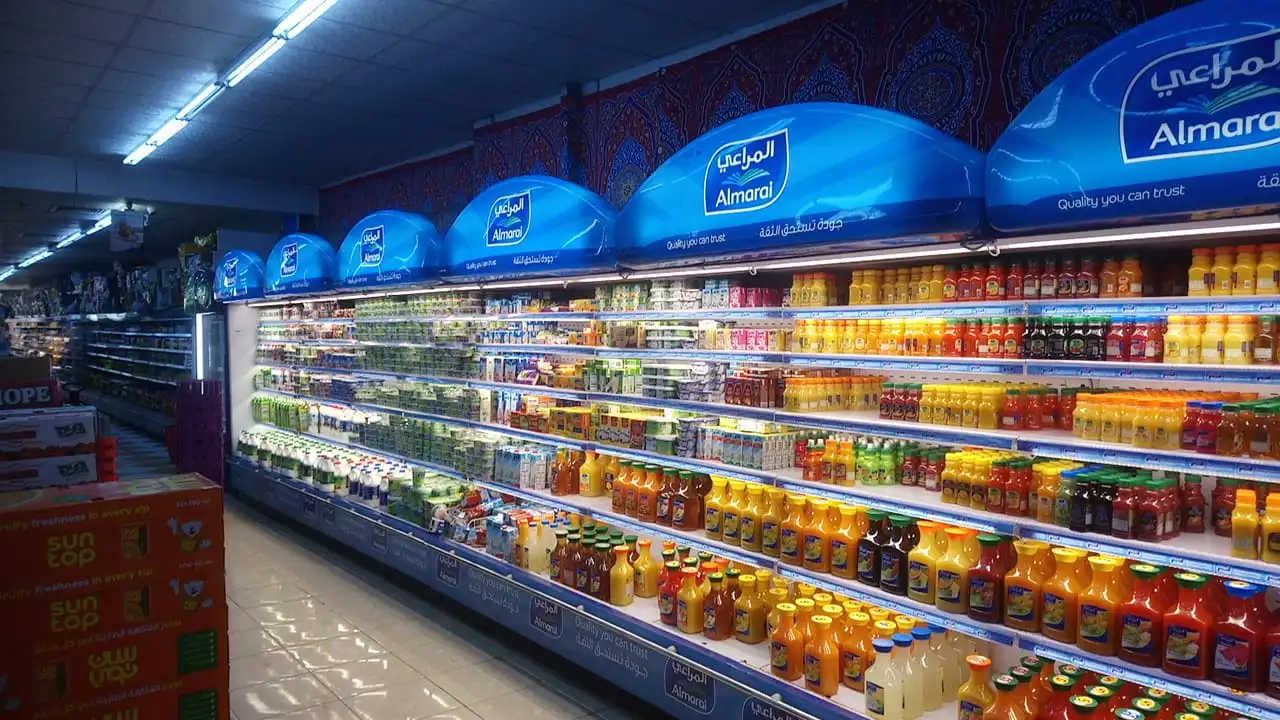
Why would one company make so many versions of one simple product? Because its customers are not one group. They buy milk for different reasons, and each version is built around one of those reasons.
Four needs, four products
Taste and fat preference. Fresh Milk comes in full fat, low fat and fat free. Some customers want the richer taste. Others are watching their diet. Same product, different preference.
Storage and convenience. Long Life Milk keeps without chilling until it is opened. It suits families who stock up once a week, people with limited fridge space, and anyone who wants a backup in the cupboard. The need here is not taste. It is fewer shopping trips.
A specific health need. Lactofree milk is for customers who cannot drink regular milk comfortably. Without it, those customers leave the category or buy from someone else. With it, they stay.
Fitness and nutrition. Protein Milk offers a high-protein, fat-free option in a 400 ml bottle. It speaks to gym-goers and people who track what they eat, and it competes with protein shakes, not with the family milk pack.
Around these four sit more options: milk with added vitamins, flavours such as date and salted caramel, laban, evaporated milk and milk powder. Each gives another group of customers a reason to choose the brand.
What this tells us about segmentation
Customer segmentation means grouping customers by what they need, not just by who they are. Age, income and location help, but the real question is why someone buys.
Look at the range again and you can see different types of differentiation:
- What the product contains: fat level, protein, added vitamins, no lactose.
- Who it serves: families, people with lactose intolerance, fitness-focused buyers.
- How it is used: daily fresh use, stored for later, on the go.
- How it fits daily life: pack size, shelf life, convenience.
A business that only thinks about “our product” will make one version and compete on price. A business that thinks about “our customers’ reasons” finds several ways to serve the same market.
The trap: variants nobody asked for
There is a flip side. Every new variant adds cost: more stock to hold, more packaging, more shelf space to negotiate, more planning, more chances of waste. Many businesses add products because a competitor did, or because the team got excited about an idea. The range grows, but sales are simply split across more items, and margins fall.
We see this often in restaurants, retail chains and franchise brands. The menu or catalogue keeps getting longer, while a small number of items still bring most of the profit.
So the useful lesson from Almarai is not “add more products”. It is that each product should answer a clear customer need that the existing range does not.
How to decide if a new variant earns its place
Before you add a product, a flavour, a size or a service tier, check four things:
- The customer. Can you name the group it is for and what they need? If the answer is “everyone”, it is not a segment.
- The gap. Does your current range already serve that need? If yes, the new item will mostly take sales from your own products.
- The demand. Do you have evidence people will buy it, such as customer requests, sales data, or a small trial? A good idea in a meeting is not demand.
- The economics. After discounts, waste and extra handling, does it make a healthy contribution? And can your team, suppliers and systems handle the extra complexity without hurting what already works?
If a variant passes all four, it is likely worth testing. If it fails two or more, it is probably a distraction.
Should you add this product?
Think of one product, flavour, size or service you plan to add. Answer six quick questions. Nothing is saved or sent.
Bringing it back to your business
You do not need a factory or a national brand to use this thinking. A café can separate its quick-coffee customers from its sit-down lunch customers. A training centre can design one course for freshers and another for working professionals. A retail chain can plan different store formats for malls and neighbourhoods.
The start point is always the same: understand the different reasons people buy from you, then decide which of those needs are worth serving well.
If you are reviewing your product range or planning your next launch, our consultants in Dubai can help you look at it through the customer’s eyes and the numbers. Send us a short note about what you are considering.
Independent educational example. BLUE KWET is not affiliated with Almarai. Product names as listed on almarai.com, November 2026.
What our clients say

“As we grew, roles got mixed up and too many decisions came to the directors. BLUE KWET redrew our structure, set KRAs and KPIs for each role and wrote down our processes. What I liked most is that they did not stop at documents. They trained our team to follow them.”


“We wanted to take Surplus Market into the UAE and needed someone to question our plans before we spent money. That is what BLUE KWET did. The entry plan was practical and told us clearly what to do first.”


“I know Ayurveda, but presenting it to investors is a different skill. BLUE KWET prepared our project report and investor presentation with us, and gave us a growth plan that respects what Niramaya stands for.”


“We brought BLUE KWET in on a market feasibility study in Saudi Arabia for one of our government clients. They were careful with the research, clear in how they presented it, and easy to work with throughout.”


“As a founder I was involved in almost everything. BLUE KWET helped us restructure the team and plan our growth, and guided me on bringing new partners into the firm the right way.”


“We brought BLUE KWET in to restructure an educational institution in India. People there had done things one way for years, so it needed patience, and the team had it. The SOPs they wrote are simple enough that the staff actually use them.”


“We worked with BLUE KWET on a feasibility study for one of our clients, an education brand. They were thorough with the market and the numbers, and quick to respond whenever we needed changes.”


“Your expertise and insights have been instrumental in helping us navigate challenges and make informed decisions. The strategic solutions you have offered have significantly contributed to our growth and improved operational efficiency.”


“I introduced BLUE KWET to a food processing company I was advising, and we ended up working on it together. I looked after the food technology side, and they set up the organisation structure, SOPs, KPIs, performance reviews, meeting routines and dashboards. Our work fitted together well, and the management now has one clear way to run the business.”

Want to talk about your business? BLUE KWET advises business owners across the GCC and India on strategy, structure and growth.
Book a consultationWhatsApp usMore insights
Costs Went Up 10%. Why Did Your Profit Fall 23%?
 Sabir K M
28 Nov 2026 · 5 min read

What Do Business Consultants Actually Help With?
Harif Jusaim24 Oct 2026 · 4 min read